About the Author
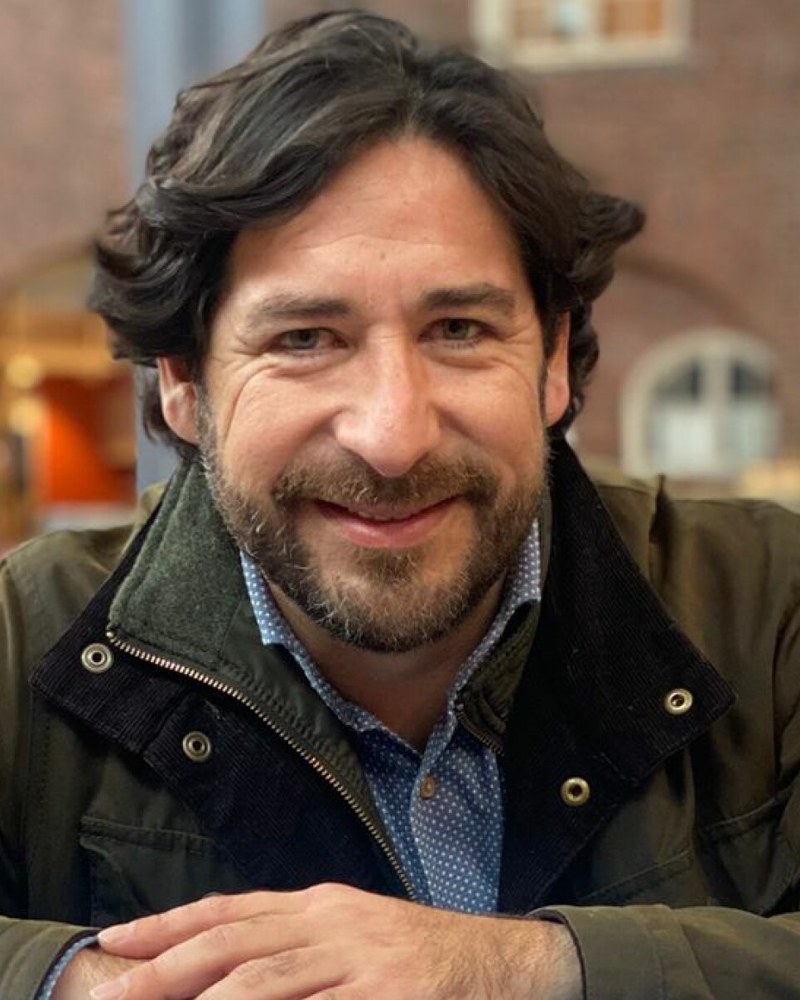
Fernando O. Mardones (DVM, MPVM, PhD) is a veterinary epidemiologist whose career bridges the farm, the laboratory, and the policy table. He trained as a veterinarian at the Universidad de Chile (2004) and completed a Master of Preventive Veterinary Medicine (2007) and a PhD in Epidemiology (2013) at the University of California, Davis, with doctoral work on the epidemiology of infectious salmon anaemia virus in Chilean salmon farms.
He began in the field — as a diagnostic-laboratory veterinarian and then a farm veterinarian in the Chilean salmon industry, on Chiloé Island and in Puerto Montt — before moving into research and academia. He has held positions at UC Davis (CADMS), the Universidad Austral de Chile, the Universidad Andrés Bello, and the Pontifical Catholic University of Chile, where he was Assistant Professor and Undergraduate Chair in Veterinary Medicine. He is currently Senior Lecturer in One Health and Aquaculture at the Global Academy of Agriculture and Food Systems, University of Edinburgh.
Alongside his academic work he has served as an aquatic epidemiology and One Health expert for the FAO and as an epidemiology expert for the IAEA, supporting disease surveillance, biosecurity, and training programmes for aquatic animal health around the world. He is the founder and director of Epivet SpA, a Chilean consultancy in aquaculture epidemiology.
His research spans One Health, surveillance, simulation and spatial modelling, risk and network analysis, and the diseases that matter most to aquaculture — among them SRS, bacterial kidney disease, infectious salmon anaemia, sea lice, and white spot syndrome. He works, throughout, in R.
Acknowledgements
This book did not come from one person. It was built on the shoulders of research projects carried out in Chile and across the world, and on the work of the PhD and Master’s students, postdoctoral researchers, and the many collaborators — in universities, industry, laboratories, and government — who generated the evidence, asked the hard questions, and tested these methods in the water.
The case studies that anchor these chapters draw directly on that shared effort: the cohorts, trials, surveys, and models that students and colleagues designed and carried through, often over years and across institutions and borders. To every student who ran an analysis late into the night, every collaborator who shared data and trust, and every farm team, laboratory, and agency that made the work possible — thank you. This book is, in a real sense, yours too.
Any errors that remain are the author’s own.